
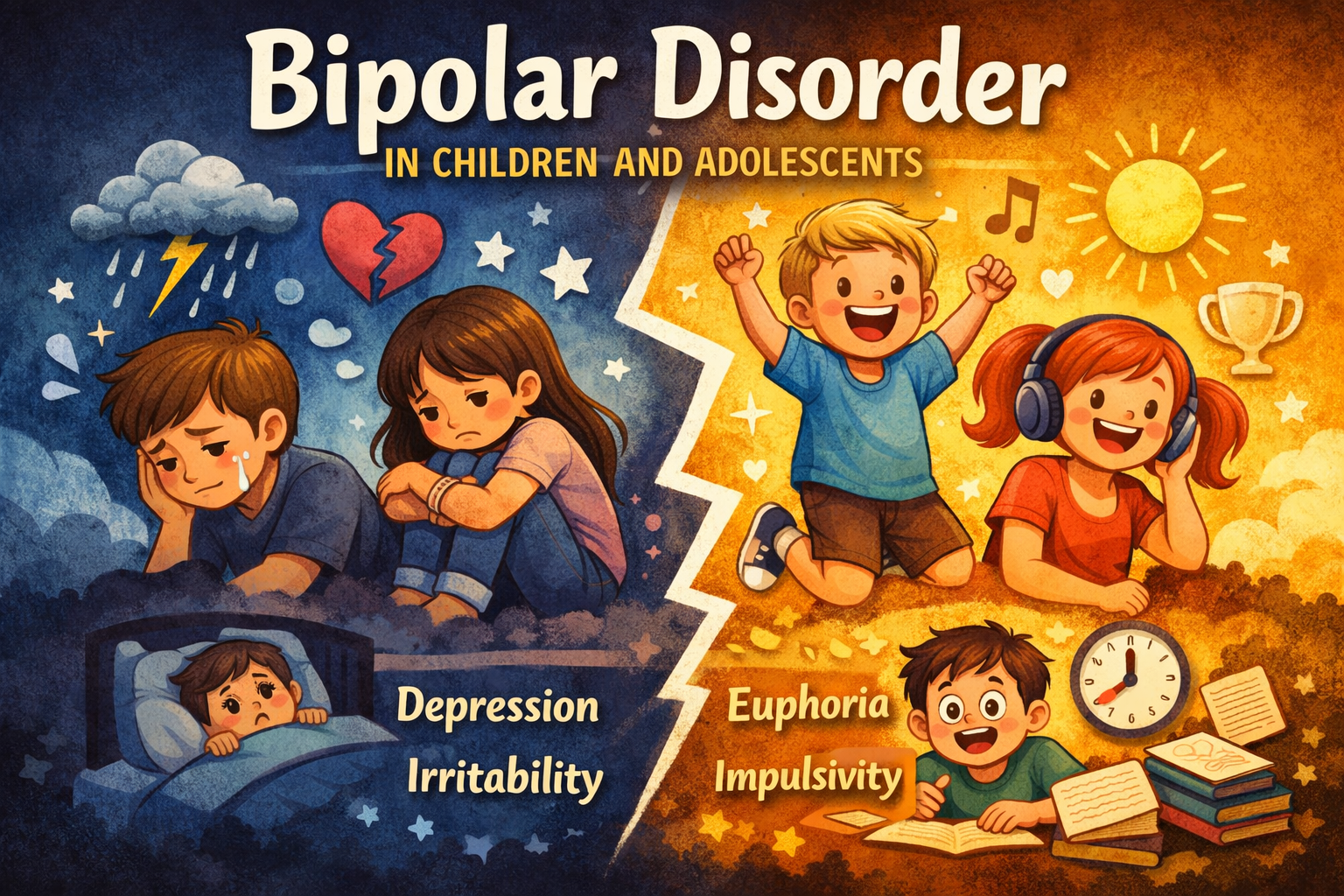
Understanding Mood Episodes, Development, and Common Misunderstandings
Bipolar disorder is one of the most misunderstood diagnoses in child and adolescent mental health.
It is not a personality trait, a behavioral problem, or simply “mood swings.”
It is also not the same as irritability, defiance, or emotional intensity.
Adolescence is a time of rapid emotional and developmental change. Because of this, many parents worry that strong mood shifts, anger, or behavioral challenges might mean bipolar disorder. In most cases, they do not. Understanding the difference is essential for getting the right care and avoiding unnecessary or inaccurate diagnoses.
This article explains what bipolar disorder is in children and adolescents, how it differs from more common developmental and behavioral concerns, and when careful professional evaluation is warranted.
Normal Mood Changes vs Bipolar Disorder
All children and teenagers experience changes in mood. Adolescence, in particular, is associated with:
- Emotional reactivity and irritability.
- Sensitivity to stress and peer relationships.
- Shifts in sleep patterns.
- Increased conflict with parents or authority figures.
These experiences can be intense and concerning, but they are part of normal development and do not, by themselves, indicate bipolar disorder.

Bipolar disorder is different because it involves distinct mood episodes that represent a clear change from a child or adolescent’s usual functioning. These episodes last days to weeks, not minutes or hours, and affect sleep, energy, behavior, thinking, and judgment. They are not brief reactions to frustration, limits, or situational stress.
This distinction between episodic symptoms and chronic or situational irritability is the single most important concept in understanding pediatric bipolar disorder.
What Is Bipolar Disorder?
Bipolar disorder is a medical condition that affects mood, energy, sleep, and behavior over time. In children and adolescents, it is defined by distinct episodes of mood change that represent a clear departure from a young person’s typical functioning.
These episodes may include periods of unusually elevated or persistently irritable mood with increased energy, as well as periods of depression marked by low mood, reduced motivation, and decreased energy.
Between episodes, many children and adolescents return to their usual level of functioning, while others may experience ongoing difficulties that require individualized support. Bipolar disorder affects approximately 1 to 3 percent of youth, with new cases most commonly emerging during the teenage years, though symptoms can begin earlier.
Childhood-Onset vs Adolescent-Onset Bipolar Disorder
Bipolar disorder can begin in childhood or adolescence, and age of onset matters.
- Childhood-onset bipolar disorder (before age 13) is less common but tends to be associated with more severe illness features, including higher rates of comorbid conditions, more frequent mood episodes, and stronger family histories of mood disorders.
- Adolescent-onset bipolar disorder is more common and often presents initially with depression, which can delay recognition of the bipolar pattern.
These differences reinforce the importance of careful, developmentally informed assessment over time.
How Bipolar Disorder Can Look Different in Youth
Bipolar disorder does not always look the same in children and adolescents as it does in adults.
In youth, symptoms may be:
- Less clearly articulated in words.
- More behaviorally expressed.
- Intermittent early in the illness.
- Mixed with irritability or agitation rather than classic euphoria.
- Overlapping with other common conditions such as ADHD, anxiety, or depression.
This complexity is why diagnosis should never be rushed and why experience with pediatric mood disorders matters.
Mania and Hypomania in Children and Adolescents
Manic or hypomanic episodes involve a clear departure from a child’s typical behavior, not just strong emotions.
Possible signs include:
- Markedly decreased need for sleep without fatigue.
- Persistently elevated or unusually irritable mood.
- Grandiose beliefs beyond what is developmentally appropriate.
- Racing thoughts or pressured speech.
- Increased goal-directed activity.
- Risky or impulsive behaviors that are uncharacteristic for the child.
These symptoms occur in episodes and are not constant.
Bipolar Depression in Youth
For many children and adolescents, the first mood episode is depression, not mania.
Common symptoms of bipolar depression in youth can include:
- Ongoing low mood or persistent irritability.
- Withdrawal from activities that were previously enjoyable.
- Low energy or frequent exhaustion.
- Noticeable changes in sleep or eating patterns.
- Difficulty concentrating or making decisions.
- Excessive guilt or feelings of worthlessness.
- Thoughts about death or self-harm.
Because depression is common and can occur in many conditions, bipolar disorder may not be immediately recognized. This contributes to diagnostic delay and underscores the importance of longitudinal care.
Why Irritability Alone Is Not Bipolar Disorder
Chronic irritability is one of the most common reasons bipolar disorder is suspected in youth. However, irritability alone does not define bipolar disorder.
Irritability can be seen in:
- Anxiety disorders.
- Depression.
- ADHD.
- Trauma-related conditions.
- Autism spectrum disorder.
- Normal developmental stress.
Bipolar disorder requires episodic mood changes, not ongoing irritability without clear episodes.

A Note About Disruptive Mood Dysregulation Disorder (DMDD)
Disruptive Mood Dysregulation Disorder, or DMDD, describes chronic, non-episodic irritability and frequent temper outbursts in children.
DMDD was introduced to help distinguish persistent irritability from bipolar disorder. While the diagnosis continues to evolve, the key distinction remains:
- DMDD involves ongoing irritability without distinct mood episodes.
- Bipolar disorder involves episodic mood changes.
Understanding this difference helps prevent misdiagnosis and inappropriate treatment.
Warning Signs That Warrant Further Evaluation
While most mood and behavioral changes are not bipolar disorder, some signs deserve closer assessment, especially if they represent a clear change from baseline:
- Markedly decreased need for sleep.
- Grandiose or unrealistic beliefs.
- Uncharacteristic risk-taking or sexualized behavior.
- Psychotic symptoms.
- Severe functional impairment across settings.
Bipolar disorder in adolescents is also associated with significant suicide risk, making accurate diagnosis and appropriate treatment especially important.
How Bipolar Disorder Is Diagnosed in Youth
There is no blood test or brain scan that diagnoses bipolar disorder.
Diagnosis is based on:
- A detailed clinical interview.
- Careful review of mood symptoms over time.
- Attention to sleep, energy, behavior, and functioning.
- Family psychiatric history.
- Information from parents, teachers, and caregivers when appropriate.
Many individuals experience years of symptoms before receiving an accurate diagnosis, particularly when early episodes present as depression. Thoughtful, longitudinal evaluation is essential.
Treatment of Bipolar Disorder in Children and Adolescents
Treatment is individualized and typically involves a combination of approaches.
Medication
Medication plays an important role in stabilizing mood episodes. Several medications have FDA approval specifically for use in children and adolescents with bipolar disorder, and treatment decisions are made carefully with attention to age, side effects, and long-term development.
Psychotherapy and Family Support
Psychotherapy is a critical part of care and includes evidence-based approaches such as:
- Psychoeducation.
- Family-focused therapy.
- Cognitive-behavioral therapy adapted for bipolar disorder.
- Interpersonal and social rhythm therapy.
- Dialectical behavior therapy in select adolescents, particularly when suicidal behavior is present.
Family involvement improves outcomes by helping caregivers recognize early warning signs, support healthy routines, reduce conflict, and promote adherence to treatment.
Why Careful Diagnosis Matters
Mislabeling a child or adolescent as “bipolar” when they are not can lead to:
- Unnecessary medication exposure.
- Increased stigma.
- Missed treatment for the true underlying concern.
At the same time, failing to recognize true bipolar disorder can delay effective care. The goal is not to rush to a diagnosis, but to understand the full picture.
A Final Word to Parents and Families
If you are worried about your child’s mood or behavior, your concern is valid. Strong emotions and distress deserve attention, regardless of diagnosis.
Bipolar disorder is a distinct, episodic condition, not a catch-all explanation for difficult behavior or emotional intensity. Careful evaluation, patience, and collaboration with experienced clinicians make all the difference.
At Mind Study Center, we focus on thoughtful assessment, evidence-based care, and supporting children, adolescents, and families with clarity and compassion.