

Every psychiatrist learns the same brain science, uses the same diagnostic manual, and prescribes from the same shelf of medications. So people are often surprised when I tell them that treating a seven-year-old and treating a forty-seven-year-old can feel like two different professions. Same training, different job.
Here’s the simplest way I can put it: adult psychiatry is mostly about interviewing a narrator. Child psychiatry is mostly about assembling a story that no single person is telling. That one difference shapes almost everything else about how I work.
The Narrator Problem and Who’s Telling Me the Story
When an adult sits down in my office, I’m talking to the expert on their own experience. They may be guarded, ashamed, or unsure how to put things into words, but the account is theirs. I can ask, “When did you stop sleeping well?” and get an answer from the person who lived it.
A child’s story arrives in pieces. A parent describes the meltdowns at bedtime. A teacher says she’s fine until math. The pediatrician mentions she’s stopped eating lunch. The child herself says “I’m fine,” or “my tummy hurts,” when what she means is “I’m terrified of the cafeteria.” No one is lying. Each person is simply standing in a different room of the same house.
So a child evaluation starts with the people around the child, but I treat the child’s own words, however few, as the most valuable data I’ll get. A nine-year-old who tells me “my brain feels loud” has handed me more than a ten-page questionnaire.

Adults Are Snapshots and Children Are Time-Lapses
With an adult, I’m usually asking whether something has drifted from a person’s established baseline. A child doesn’t have a settled baseline yet. A tantrum is ordinary at three and a red flag at ten. Separation anxiety is expected at two and worth a conversation at twelve.
That’s why the central question in child psychiatry isn’t only “Is something wrong?” It’s “Is this wrong for this age, and is it getting in the way of growing up?” I think in terms of milestones: friendships, learning, sleep, independence. I’m also careful with labels. The brain keeps developing well into a person’s twenties, so a diagnosis given in childhood deserves some humility and should be revisited as the child grows.

Same Struggle in a Different Costume
The same condition can look almost unrecognizable depending on age.
Depression
An adult may describe sadness, emptiness, or loss of interest. A child or teen is more likely to show irritability, stomachaches, school refusal, or sudden withdrawal from friends.
Anxiety
Few kids say “I’m anxious.” They cling, avoid, ask “what if” a hundred times, or develop headaches before school.
ADHD
In a child, it can look like a body that won’t stay in a chair. In an adult, it’s often invisible from the outside: a mind that never quiets, chronic lateness, projects left half-finished, and exhaustion from working twice as hard to look organized. Because symptoms need to have started in childhood for an ADHD diagnosis, I sometimes ask adults to dig up their old report cards. A third-grade teacher’s comments can be surprisingly revealing.
The Medication Conversation Is Different
Fewer psychiatric medications are FDA-approved for children than for adults, and many treatments have been studied mainly in grown-ups. In practice, that means I start low, go slow, and often consider therapy first for milder concerns. A child’s medication plan also comes with its own check-ins: growth, weight, sleep, and appetite, plus blood pressure with stimulants, for example. Antidepressants carry a boxed warning about increased suicidal thoughts in young people through age 24, so I follow families closely in the early weeks.
There’s another layer. The dose I choose today has to fit a child who will be taller, heavier, and in a different grade in six months. Medication in childhood isn’t a decision I make once. It’s one I keep re-asking: does this still fit the child in front of me? And families should never start, stop, or change a psychiatric medication on their own. Those decisions belong with the prescriber.

Consent, Confidentiality, and the Teen in the Middle
Adults consent to their own care. With a minor, parents or guardians consent, but I also want the child’s assent, their genuine willingness to be there. Kids who feel ambushed don’t talk.
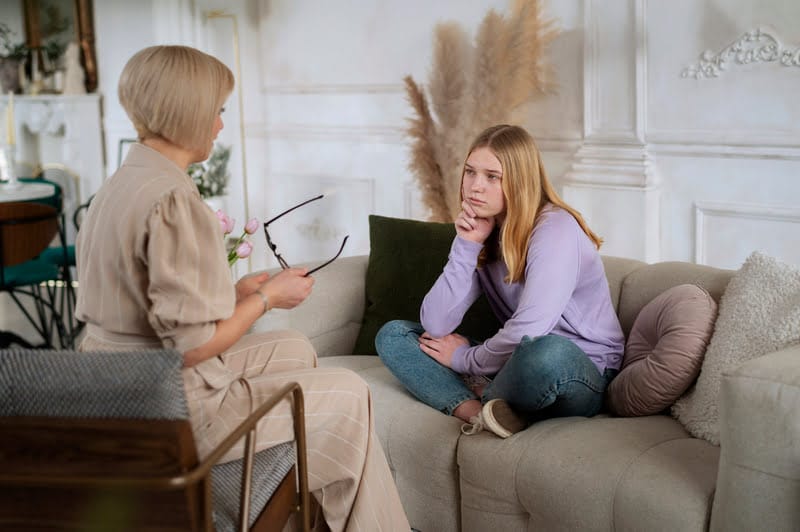
Teenagers add a wrinkle. They need a space that feels private enough to be honest, and parents need enough information to help. I’m upfront about this at the first visit: what a teen tells me stays between us unless there’s a safety concern, and I’ll make sure parents know what they need to support treatment. Specific rules vary by state, but trust is what makes treatment possible, and I protect it carefully.
The Parents Are Part of the Treatment
In adult psychiatry, treatment centers on one person. In child psychiatry, the household is often part of the plan: bedtime routines, school supports like an IEP or 504 plan, and how everyone responds during a meltdown. Sometimes I gently suggest that a parent get support for their own stress, anxiety, or depression too. It’s never about blame. Children live inside their families, and supported families help children get better.
The Handoff Years
One part of working with teenagers rarely gets discussed: the handoff. At eighteen, a young person who has relied on a parent to book appointments and pick up refills suddenly owns all of it, often just as they leave for college or start a job.
So from the first visit with a teen, I’m quietly preparing them to become the expert on their own care. Can they name their medication and explain why they take it? Can they describe their symptoms in their own words? My goal is to become a resource that belongs to them, not just to their parents.
What Never Changes
For all these differences, the heart of the work is the same in both rooms: listening closely, taking people seriously, and treating the whole person rather than a list of symptoms. The adult across from me and the child on the floor playing with blocks both deserve a psychiatrist who is curious before being certain.
So Which Do You Need?
If your child is under 18, a child and adolescent psychiatrist is the right fit, since they’re trained in development, family dynamics, and pediatric treatment. For adults, an adult psychiatrist is. The gray zone is roughly ages 16 to 24, where the right fit depends on the person and the concern. It’s also very common for a parent and child to both benefit from support, whether at the same practice or with separate providers.
If you’re not sure where to start, a first consultation can sort that out. You don’t need to arrive with the right diagnosis, only a willingness to tell the story, or, in the case of a child, to help us put the pieces together.